My WSET Diploma Level 4 Exam Experience

Wine has been a passion of mine for just about as long as I have been allowed to drink it. From the bottles of straw bottomed Chianti and Pere Patriarche Rouge on my grandparent’s dinner table, to a 1986 Premier Cru Gevrey-Chambertin that my pops selected one night at Spark’s Steak house (my ‘epiphany wine’), it has always been a part of my life. The more I sipped,  the more curious I became about everything that went into wine and what made it so damn tasty. Once I started working in the biz, IImage result for Pere Patriarche Rouge decided I needed to step up my ‘wine geek’ status a notch or two which was when I decided to enroll in the WSET.  The Wine and Spirits Education trust is based in England with satellite schools throughout the globe and is one of the most recognized and respected wine education organizations in the world. They offer a variety of programs starting with a basic Level 1 Award in Wines all the way up the wine education ladder to one of the most grueling and intense programs out there, the notorious Level 4 Diploma in Wine and Spirits.

I entered the program through the International Wine Center in NYC 7 years ago at the Level 3 Advanced Level. While the Diploma Level gets most of the attention and accolades, the Advanced Exam is not to be discounted as it is a serious test of wine knowledge and blind tasting skill. It consists of a written theory section containing both multiple choice and short essay questions followed by a blind tasting of two wines under stringent time limitations. So after successfully passing the exam, the fateful decision had to be made…. To Diploma or Not To Diploma.

With a full time job at Wine Enthusiast and at the time having a 3 and 1 year old at home, I probably should have had my head examined. But having completed a Masters in Elementary Education program in my younger years, and more importantly having this deep rooted passion for wine, I was infinitely intrigued to see what all the hype was behind the Level 4 Diploma. There are 6 units to the program, each with its own exam. In order to complete the program you must pass all 6 within a 3 year time frame, and every one of the tests at this level makes the Advanced test seem like taking an eye Image result for wine eye chartexam with a magnifying glass. There are separate Units for Sparkling Wine, Fortified Wine, Spirits, Wine Production, The Business of Wine and the Granddaddy of them all… Unit 3 – Light Wine. ‘Light’ is a complete oxymoron here as this makes up half of the program and is the heaviest of all in terms of information, tasting and time expended. The WSET uses the term Light Wine, but it is synonymous with ‘still wine’, so this section covers every region in the wine producing world and every wine that comes out of those regions…literally.
I won’t go into the gory details of what is entailed in terms of studying… but let’s just say that my alarm was set for 4:30 every morning and my home, car and office were all decorated with homemade wine flash cards. Not to mention the inordinate amount of blind tastings (not drinking mind you) that my poor wife had to administer late into the night to train all the senses. So after passing a majority of the other units and heading into my third year of the program, it was time to take on Goliath. Who would have thought there was so much to know about wine?!? How many hectares of vineyards are planted in Valais? What grapes are used in the Nagy Somlo region of Hungary? At what time did they pick the grapes for the 1973 Chateau Montelena award winning Chard? What was the name of the third child of the Chateau Margaux winemaker in 1982? That sort of thing.

The Unit 3 exam is a 12 wine blind tasting followed by an extensive written section.  The WSET’s goal is to see if you are able to identify specific characteristics in wine, connecting them to particular grapes and regions, judging quality and ageability while defining the wine using the their ‘tasting grid’. A major benefit of the WSET model is the credit awarded by properly describing the wine characteristics. So even if you are incorrect in identifying the grape and/or region, if your description grooves with the majority of WSET examiners grading your exam you still have a shot at earning enough marks to pass.

After months and months of blind tasting and sleeping with the Oxford Companion to Wine under my pillow praying for some form of osmosis, the day had finally arrived. The first flight was to examine 3 wines all produced from the same grape variety. In front of me sat 3 lemon colored wines with varying intensity, so I started going through the tasting grid trying not to jump to any conclusions (which is easier said than done). I detected grapefruit and some grassyImage result for grapefruit and lemongrass notes on the first wine, so I ignored the grid as clearly these were all Sauvignon Blanc. Luckily, my snap judgement was correct as all 3 wines were indeed produced from Sauvignon Blanc. Of course, you do not find out results until about 3 months after the fact, leaving around 90 days to crucify myself for falling into the most obvious blind tasting pitfall. But the grapefruit don’t lie… most of the time.

The next 3 wines all were produced in the same country. As I sniffed the first white wine, a hint of honey emerged over the apple and pear fruit core…obviously Chenin. Having already hastily predetermined the grape variety I moved down the line to the light red wine which emitted pretty aromas of red cherry, strawberry and a black pepper spice, so this had to be Pinot. My brain was racing trying to connect the dots. Chenin runs rampant in the Loire valley and the Pinot had Burgundy written all over it…France it is. The last sample was a sweet style dessert wine with quite a distinctive honeysuckle aroma, but it didn’t have that Sauternes-like character. It must be a late harvest Chenin from Bonnezeaux or somewhere in the Loire. Or could this be one of those trick tasting flights? South Africa produces plenty of Chenin and some Pinot, but this Pinot didn’t have those classic South African earthy undertones, and it felt like a cooler climate style of Chenin… so it simply HAD to be from the Loire.

Related imageOr, not so much… the first wine wasn’t even Chenin. It was a Kabinett Riesling from GERMANY! Both wines can have apple and pear fruit with a slight honey note as well, which is exactly why you don’t jump to conclusions. The red wine was in fact Pinot, but Spätburgunder would have been more appropriate in this case. And of course, the final wine was not an obscure late harvest Chenin, but an obvious Auslese Riesling.

In a word…FAIL!

The next flight of 3 needed to be placed in a ‘good, better, best’ order with specific reasons as to why. Moments after the wines were poured the entire room filled up with black fruit, smoke and spice… blatantly Syrah. However there was some clear evidence to back up my impulsive guess as all the wines had dark berry fruit with either sweet spices, smoked meat or olive tapenade. I had them all pegged as Northern Rhone wines, and while they turned out to be fairly high quality Australian Shiraz with some age on them, I felt like I nailed that section which provided a much needed boost of confidence going into the final flight.

The final 3 wines for the exam were a random sampling of any wine from anywhere. In front of me stood a white, rosé and red wine looking like Mariano Rivera at the bottom of the 9th ready to take me down. Image result for white rose and red wineThe white had a lovely nose of green apple, white flowers with just a touch of lemon peel.  WIth its high, crisp acidity, this one really felt like a dry Riesling.  It ended up being a dry, delicate Torrontes (which can carry Riesling character) but I was positive on my call so I was feeling strong heading into the Rosé. Fresh strawberry and cherry fruit, a little rose petal note and wonderfully bright acidity. I remember thinking to myself: ‘If this isn’t a Cotes de Provence Rosé than I simply have no idea what the hell I am doing’. Luckily, that is exactly what it was.
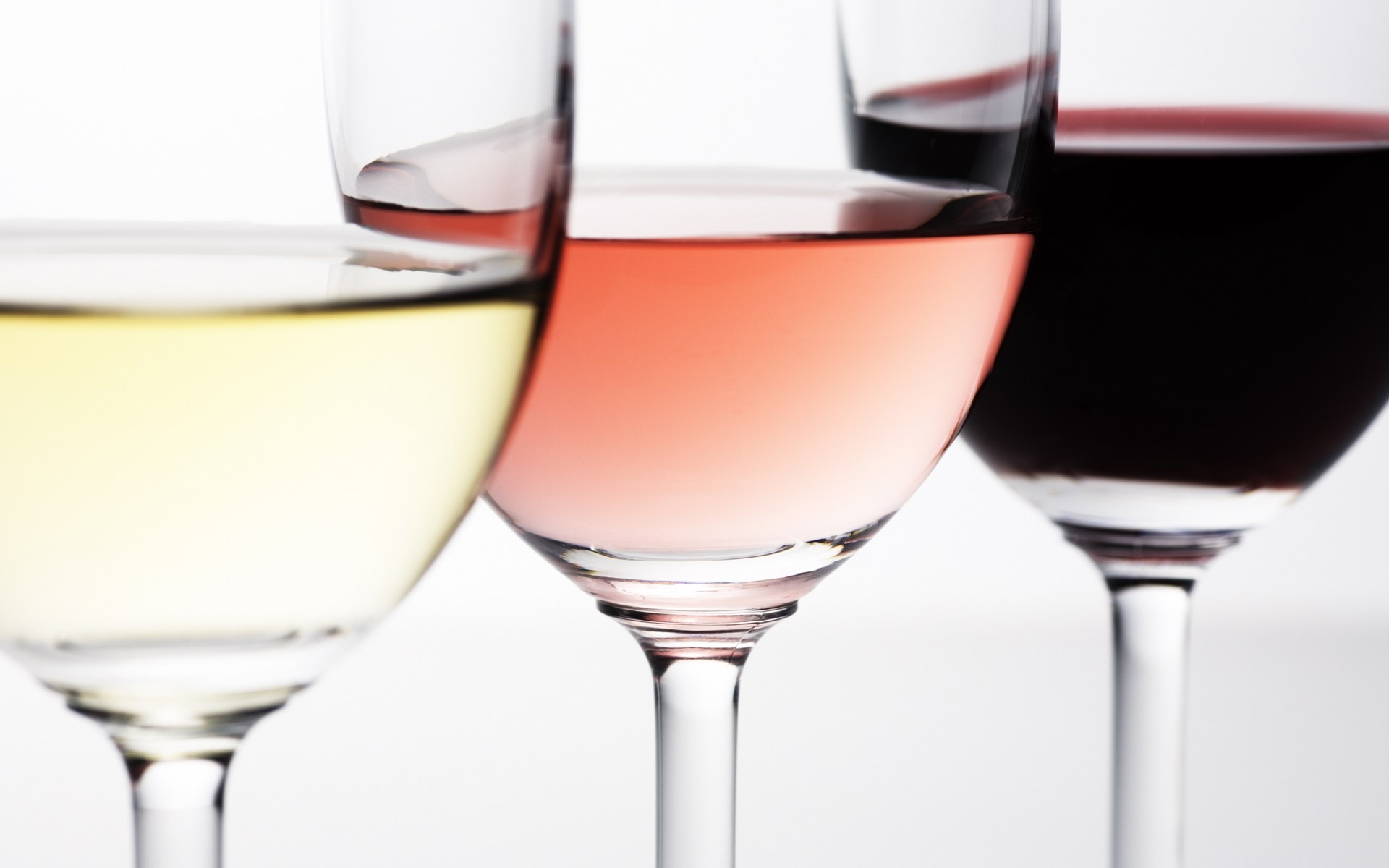
Having believed I was 2 for 2 so far, I was feeling like Bacchus himself going into wine number 3. I got within about 3 inches of the glass and that was all I needed. I tried to fight off those jump to conclusion demons, but how could it be anything else?! It was deep ruby in color exuding intense aromas of black cherry, cassis, vanilla and hints of eucalyptus with opulent fruit on the palate, high tannins and a long, dry finish. I figured the WSET took pity on us and finished things off with a lay-up… a high quality Napa Cab. But of course, the conclusion-jump once again landed me in the muck. This dead ringer for a Napa Cab was in fact a new world style Gran Reserva Rioja. But, I must have nailed just about every note in this section as I miraculously Passed with Merit on the final 3 wines.

Image result for blind wine tasting

With the morning 2.5 hour tasting exam in the books, it was time for the written theory section for the final 3 hours after a much needed lunch break. I would have preferred the order reversed, as all of that tasting (even though you’re spitting) does take a toll on the mind and body. But nonetheless, it was game time.  5 of the possible 7 essay questions had to be answered with a certain amount of marks to earn a pass. I won’t bore you with the details of this section, but let’s just say I am thankful that I committed just about the entire Oxford Companion to Wine to memory, as there were some ridiculously obscure questions on regions, grapes, events and wine styles for sure. And trying to beat the clock for this part of the exam was even more challenging than for the blind tasting.

Turns out Tom Petty was right… the only thing more stressful than taking the exam is the three month waiting period to find out the results. After months and months of nail biting, self-crucifying and continued wine tasting in anticipation (without spitting this time), the irrevocable results had finally arrived. I braced myself for the worst and prayed that I passed just one of the two sections. I hesitantly opened up the envelope with my heart racing in full panic mode. I peaked just barely enough to see the results and was elated to learn that I passed BOTH the tasting and written parts of the exam. With a giant fist pump and a roar of ‘Hells Yeah!!’ that could be heard all around my block, it was over. Mission… accomplished.

The International Wine Center Announces the 22nd Graduating Class

A Few Wine Tasting Notes…

Just thought I would share some tasting notes on a few wines I have recently enjoyed ranging from good values to simply RIDICULOUS juice!

CAM COLLECTION 2013 MONTEREY PINOT NOIR $18 (found it for $10!)

CAM Collection 2013 Pinot Noir

This is quite forward on the nose with ripe, bright cherry and raspberry fruit aromas , showing hints of black pepper and cocoa. It’s fairly big for an entry level Pinot with the same fruit carrying over to the palate enhanced by notes of clove, smoked bacon and espresso. A lengthy, dry and overall pleasing finish caps off this true value Pinot.  GOOD


Cune Rioja Imperial Reserva 2011   $35

Related image

This wine offers alluring aromas of black cherry/currant with dark chocolate and smoky oak. It’s a big wine, no doubt… but has good acidity playing nicely with the dense fruit and firm tannins. Opulent and rich, but exhibits some of that old world Rioja feel with the tobacco and mineral character. Will age well over the next decade.  SOLID


Alta 2013 Quatreaux Red Blend, Napa Valley $60 Retail (available for under $40)

Image result for alta quatreaux 2013

Quatreaux refers to four of the five Bordeaux grape varieites used in this blend including Cab Sauv, Merlot, Cab Franc and Petit Verdot (no Malbec). It exudes new world Napa fruit including dark berry and cassis with an old world undertone of smoke, earth and roasted nuts. Tremendous balance of acidity, weight and tannins with a long finish that leaves just a hint of baker’s chocolate… I love that!  SOLID! 


Element Winery 2013 Lemberger, Finger Lakes  $42

If you have not heard of Element Winery yet, let me be the first to put it on your radar.  Chris Bates MS and his team are producing some of the best juice in the Northeast. I wasn’t expecting much from a Finger Lakes Lemberger, but this had a lot going on! Certainly intense with bright cherry, rose petals and spice on the nose leading to a vibrant palate driven by acidity and ripe red fruit. But it wasn’t a pushover, enough body and weight to stand up to some lighter poultry dishes for sure.  GOOD!

Now, for the RIDICULOUS wines…

2008 Léoville-Barton, St-Julien $80

Still bright ruby in color, this is drinking beautifully now but has lots of time left on the clock. Black currant, cocoa powder, espresso beans and graphite aromas on the nose are quite intense and sultry. Its supple and soft on the palate, as the tannins are mellowing with the acidity balancing out the dense fruit. Showing off that classic Left Bank terroir, loads of chalk and minerality on the palate with the dark fruit and cocoa hanging on through the finish. SOLID!


2001 Beaulieu Vineyard “Georges de Latour Private Reserve” Napa Valley Cabernet Sauvignon  $90

2001 Beaulieu Vineyard "Georges de Latour Private Reserve" Napa Valley Cabernet Sauvignon

From a great vintage like 2001, I was expecting this to still be fairly big and brash. But as a very pleasant surprise this was not the case. Super complex with layers of well developed dark fruit, cassis, oak, roasted almonds and subtle anise notes on the nose and palate. Supple, soft and silky with polished tannins and a long, memorable finish.  I am thrilled I opened it when I did, as I do not see this one improving much further. KILLER

Abacus, ZD Wines, Napa Valley (NV) $500

Related image

This is one of the cooler and more interesting wines made in Napa. ZD basically uses a solera style aging and bottling process including all of their Reserve Cabs from 1992-2015 to make a non-vintage Reserve Cab blend. The result is a wine that has oodles of big, bomby Napa fruit and oak, but has the structure, finesse and elegance of a wine that has seen about 6-8 years of bottle age, so it is fairly ready to drink right away. It could still use another handful of years in the cellar, but it is one of the more impressive cult Napa wines out there. KILLER!

Quilceda Creek Cabernet Sauvignon 2008, Columbia Valley, WA  $250

Image result for quilceda creek 2008

This is not only the best wine I’ve tasted this year, but possibly one of my Top 3 wines of all time! This stunner is intense on all levels with dense and focused black cherry, plum and black currant fruit on the nose. Beyond the lovely fruit core there are layers and layers of sweet and exotic spices, smoke, sandalwood, lavender, anise, cocoa and vanilla. When you taste this wine, you will understand what all of those fancy wine terms mean. It has harmonious balance, incredible structure, elegance and finesse. It will certainly continue to age and improve over the next decade +, but what a treat to enjoy this wine with good friends over a perfectly cooked steak. FANTASTIC!


** My rating system is listed below as I prefer to use ranges than exact numbers.

WWG Rating Scale     
100 Points                    =     Perfect
97-99 Points                =     Fantastic
94-96 Points                =     Killer
90-93 Points                =     Solid
85-89 Points                =     Good
80-84 Points                =     OK
79 Points or below     =     No Comment

Red, White and Blue Wines for the 4th!

Yeah, that’s right… blue wine. I know, I know…. I had the same reaction. But why? How? And, why? It seems some entrepreneurial producers in Spain thought it would be a clever idea to craft a blue colored wine targeted at the all encompassing market of the millennials. Apparently it is a blend of Spanish red and white grapes which gains its color from anthocyanin, a pigment found in grape skins, and iodine that is extracted from the Isatis tinctoria plant. It is reportedly a sweet, young refreshing style of wine meant to pair with sushi and nachos with guac. Having never tried this blue wine before I cannot offer any opinion on the quality or value… but I can say that my expectations are fairly low.

Now for the REAL 4th of July recommendations! Is it me, or did it get super hot super quick to start the summer? I feel like the Chardonnay season came and went and I am
already reaching for more refreshing white options. While Sauvignon Blanc and Pinot Grigio are always popular, as an overly broad generalization, they tend to seem a little too simplistic (sorry Santa Margherita and Brancott fans). As of late I find myself reaching for that dry style of Riesling from a multitude of regions as well as Chenin Blancs from the Loire and South Africa. The nice part about all of these wines is that they typically offer a solid value.

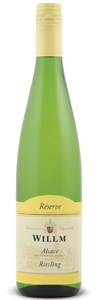
The Fox Run Rie2015 Den Chenin Blancsling (Finger Lakes) is a staple in my house over the summer months, and the bone dry Willm Reserve Riesling (Alsace) is a tremendously food friendly wine to pair with all kinds of shellfish and chilled seafood starters. The Painted Wolf ‘The Den’ Chenin Blanc is crisp, tropical with just a hint of oaky notes, and their Pinotage from the same line is pretty stellar as well. The Sauvon Vouvray (Chenin Blanc grape) is a value superstar every vintage with its floral character and subtle honey notes, and can actually gain complexity with a few years of age. The best part… all of these wines are under $20.


Red wines that are suitable for the 4th, and the summer in general, need to be grill friendly that can pair up with anything from burgers and dogs to filet and lobster surf & turf. That means they have to be versatile, hearty and food friendly (which typically means they need a good dose of acidity). Let’s not forget that it’s hot out there… so some lighter, thirst quenching reds (which can even be served slightly chilled) are integral to any successful July 4th BBQ. I get made fun of all the time for my infatuation with the Seaglass Santa Barbara Pinot Noir, but it remains the best Pinot under $15 for my money. This is one of those lighter style wines that can benefit from a few minutes in the fridge before opening,  accentuating the lively acidity and bright cherry and berry fruit.

I find myself leaning towards the Northern Rhone wines during the grilling season. The smoky and meaty style of Crozes Hermitage and Saint Joseph wines (Syrah based) complement just about any sort of beef you decide to toss on the grill. The Jean Luc Colombo Crozes ‘Les Fees Brunes’ is a stellar under $25 option while the J.L. Chave Saint Joseph ‘Offerus’  is solid just about every vintage and can be found for just a few bucks more. Of course if you are feeling saucy and looking to splurge on something, how about a Cote Rotie for the 4th this year? E. Guigal, Vidal Fleury and St. Cosme are all quality producers and their wines come at a somewhat ‘value’ price under $80. Top tier Cote Rotie wines are easily $100 and up so yes, $50-75 is considered a value for this particular region.

But if you want to keep it simple and patriotic for the 4th, grab some California Zin and Petite Sirah. Both are as American as you can get when it comes to grape varieties, and are big enough to stand up to just about any of your standard BBQ fare. They can offer various spices and boast a firm tannic character to offset those fatty and saucy pork and beef dishes. Zichichi (Dry Creek Valley) is one of my perennial favorites for both varieties, but they are not the easiest to come by. On the Zin side, I always find the Terra d’Oro wines exude great complexity and character without breaking the bank both at their entry level as well as their old vine single vineyard higher end offerings.  Of course if you are from the ‘Go Big or Go Home’ camp, then seek out one of the many Zins from Turley. They range from the entry Juvenille level up to several single vineyard options, all opulent and killer! As far as Petite Sirah goes, Handcraft has a nice one out for under $15 that will certainly please the palate. But for about $40 you can find the Stag’s Leap Winery P.S. which slams you with dark berry, peppery spice and is flat out tasty juice. Talk about a wine that screams out for BBQ ribs and wings! But this is a big boy for sure, so give it a little time to show it’s true colors…none of which are blue 😉


Easy Easter Ham & Lamb Wine Pairings

Let’s keep this short and sweet, as Easter is just a couple of days away. The classic Easter meal usually features one of two meats, Lamb or Ham. Luckily each of these options has one wine that pairs perfectly with it practically regardless of how it is prepared.

Ham and Pinot – A typical glazed Easter ham has both sweet and savory flavors, along with a touch of salt. So the idea is to match it up with a wine that has high acidity, low tannins and lots of fruit. So a lighter Zin, Rhone or Chianti could work, but West Coast Pinots are really the way to go. Seaglass from Santa Barbara is a great value option and Nielson (by Byron) from the Santa Maria Valley is a little heartier and will cost a few bucks more, but it is full of expressive cherry, raspberry and peppery spice goodness. However if you can get your hands on some juice from the mad genius Rick Moshin from his extensive and ecletic line of Russian River Valley Moshin Pinots, then you are in for truly a heavenly Easter meal.


Don’t like Reds? Then Riesling will probably be the best pairing option. You know how apple, apricot, and pineapple are ideal partners for ham? Well, the same goes for the wine.  The apple and tropical flavors contrast perfectly to a salty ham while the bright acidity and light style keep the sweetness levels in check. Wilim Riesling from Alsace is bone dry and an ideal option, especially for around $15. But if you like a hint of sweetness and more body you may want to go with a Spatlese from Mosel. However my favorite white pairing is the Eroica Riesling from Columbia Valley, Washington. Chateau Ste. Michelle and Dr. Loosen partnered up to create this beauty and for around $20 I dare you to find a more luscious, balanced and yummy Riesling anywhere.

Lamb and Cab – Lamb is full of flavor, fat and if it is grilled will have some smoky character too. You need a big boned, tannic wine to stand up to a meat like that. If you are grilling it, the Bordeaux route is preferable as the terroir driven nature of those wines accentuate that grilled, smoky flavor. My favorite value Bordeaux right now is Chateau St. Barbe 2011 as it is a big wine with loads of minerality and a fruit filled, long, dry finish. Best under $20 Bordeaux out there, hands down. Chateau Talbot offers a lovely, classic Bordeaux experience, but will be at least double the Barbe price.

California Cabs will work just as well, particularly if you have a thicker cut and are roasting the lamb. McMannis offers a solid value Cab for under $15 and the new vintage of Twenty Rows 2012 Napa Cab is surprisingly stellar for around $20, as I have not been a fan of past vintages.  But the ’12 Peju Napa Cab is off the hook delicious with oodles of big, dark fruit, vanilla and spice. It ain’t cheap at around $50, but it is certainly guaranteed to please your entire Easter crew.


Some New Wines To Try in 2016!

Already caved and broke your New Year’s resolution? Not to worry, I have a new one for you that’s going to be much easier to adhere to and a hell of a lot more fun.

Most of us fall into the same routine when it comes to drinking wine, we stick with what we know and have always enjoyed as comfort and consistency remain the most important factors. But what if you never tried a Napa Cab or an Italian Pinot Grigio for the first time? How could they eventually become your favorites??

2010-Robert-Mondavi-Winery-Napa-Valley-Cabernet-Sauvignon                      

It’s like my man Daniel Tiger says: ‘You gotta try new food ’cause it might taste…. GOOOOOODDD!!’ (If you have kids under 4, you know the song) If you don’t try new and different wines, your palate may never experience the multitude of unique aromas, flavors and textures that are out there in the wonderful world of wine. So here are a few examples that are somewhat off the grid for most wine drinkers but have a lot to offer and are steadily improving in quality and exposure.

Finger Lakes Pinot Noir

The Finger Lakes region has produced some fantastic expressions of Riesling and Chardonnay among other white varieties over the last few years. But the reds have been a little light and green due in most part to the immaturity of the vines and the colder North East climate. Well guess what… the vines are getting older and the winemakers have learned the intricacies of the land and climate leading to a much needed overall improvement of the FLX reds. Some stellar Pinots have been crafted from certain producers such as Anthony Road, Fox Run, Heron Hill and Hearts & Hands.  My favorite is the 2013 Lust Pinot from Inspire Moore. It displays true Pinot fruit character balanced with well integrated toasted oaky notes and lovely dark spices. It runs around $25-30, but is on par with Pinots from better known regions at the same price point.


Tuscan Syrah and Malbec

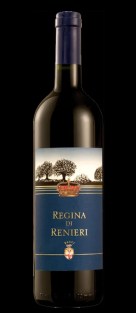
Chances are you’ve probably tasted and enjoyed a Super Tuscan wine in the course of your wine drinking era… but I’ll bet it didn’t have Syrah or Malbec in it! Super Tuscans are typically blends based on the Sangiovese grape. A quick history note… they emerged from rogue, yet talented, wine producers that did not want to follow the regulations in Chianti and HAVE to use primarily Sangiovese in their wine. Nowadays most Super Tuscans will still have Sangiovese in the blend even though it is not mandated,  but they may choose to just utilize Cabernet Sauvignon, Merlot and Cabernet Franc (styled after the iconic wines of Bordeaux) either in a blend or single varietal wine. But because there are no restrictions on what grapes can be used, winemakers started to experiment with other international grape varieties, including Syrah and Malbec. When done properly, these can be intense, seductive and downright delicious wines! The 2011 Vie Cave Toscana, Maremma (Antinori) is sleek and racy made with 100% Malbec while the 2009 Regini di Renieri is dark, brooding and complex produced from only Syrah. Both are examples of serious, ageable Tuscan juice and will run about $30-35.


Greek Assyrtiko

I too once treated the wines of Greece similarly to The Phantom Menace of the Star Wars Trilogy and did my best to avoid them. But as of late I find myself specifically seeking them out, particularly the Assyrtiko white wines from the island of Santorini. This indigenous grape is mostly planted in the volcanic rich soil on the island imparting healthy amounts of minerality and acidity with some great citrus and floral components as well. The Claudia Papayianni 2013 Ex’arnon is a blend of Sauvignon Blanc and Assyrtiko and is as light and refreshing as it is crisp and floral. A true expression of the region and great value for around $16 and makes a great pairing for any chilled seafood dish.

Some Fall Wines To Help Get Over the Summertime Blues

Get over it people…summer’s over. Sorry to be the bearer of bad news, but it’s time that someone said it out loud. Sure, I’d love to still be kicking up the sand and body surfing the waves, grilling all day long while knocking back some summer brews and crisp, mouthwatering whites like everyone else. But it’s time to face facts, fall is coming and there is nothing we can do about it. Well, almost nothing.

What we can do is start switching gears from all those light and refreshing beverages to some with a little more body, spice and flavor. When it comes to beer, I don’t need to tell you what is on the horizon…can you say, Pumpkin?!?! But for wine, there is a myriad of red and white selections that can make the transition from the dog days of summer into the cool autumn nights and those breezy, foliage filled days a little more palatable.

Chardonnay

While Pinot Grigio and Sauvi Blanc kept you cool and refreshed over the summer, Chardonnay makes for the ideal fall white. With so many different styles ranging from the clean, lean and green apple driven unoaked version to the smoky, oaky and buttery bombs, it can be enjoyed during those warm fall afternoons or those chilly evenings. Having recently visited the Finger Lakes, my two favorite Chards right now both hail from Fox Run Vineyards where they are producing some serious whites. The unaoked Doyle Family Vineyard Chardonnay as well as the noticeably oaked Reserve Kaiser Vineyard Chard are both impeccable for the season and super reasonable under $15 for either option.

Zinfandel

No, not the pink stuff… REAL Zinfandel. There is something about all that blackberry and blueberry pie, brambly fruit and peppery spice that just screams fall to me. Whether opening a bottle for those late season grill sessions, or just enjoying a glass in front of the fire pit, Zin and fall truly make a perfect pairing. Rosenblum’s entire line of Zinfandel is pretty stellar, but for me the Rockpile Vineyard for around $25-30 a bottle is a clear standout. And for about $20-25 you can grab the Decoy Zinfandel (entry line of Duckhorn) which is a true value as it exhibits much of the same flavor profile as the higher end Paraduxx Zin that is twice the price.

2012 Decoy Sonoma County Zinfandel

Northern Rhone

Most people seem to be more familiar with the Southern Rhone (AOCs such as Cotes du Rhones and Chateuneuf Du Pape) Grenache based wines than the Northern Rhone which is a little more elusive and dare I say…mystical? These Syrah based wines (some with a dash of Viogner, yes a white wine, added into the blends) are known to be quite complex yet elegant and typically carry aromas and flavors of black fruit, kirsch, pepper, earth, floral notes and even bacon fat. These hearty and silky wines are just what the doctor ordered to help keep warm and cozy on those crisp autumn evenings.

Certain AOCs such as Cote Rotie and Hermitage are home to some of the most famous vineyards in the world and produce some outrageously delicious, ageable and expensive wines. Yet, there are less elite appellations such as Crozes Hermitage, Cornas and St. Joseph that intrinsically carry similar styles and characteristics at a much more affordable price point. Some top notch producers to keep an eye out for are E. Guigal, M. Chapoutier, Tardieu Laurent, Delas Freres and Saint Cosme.

E-Guigal-Cote-Rotie-Brune-Blonde-2010        wine bottle label       

Port

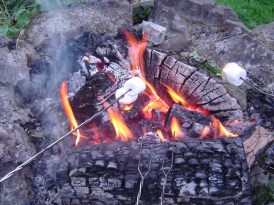
This may not be an everyday fall kind of wine, but if the right occasion arises a little Port can go a long way. Fortified wines are like getting the best of both worlds, since they are typically a combination of some form of spirit and wine. In producing Port, brandy is added to the juice during fermentation in order to halt the process leaving much of the residual sugar in the finished product… pure genius! Originally it was done so the wine could travel without spoiling, but ever since the chaps over in England were taken with this new style of wine it has become a dessert wine staple. So when you are sitting out in front of the fire on those lovely fall nights making S’mores with the kiddies, the chocolate, dark plum and berry flavors of most Ruby style Ports, particular a Taylor’s Late Bottled Vintage Porto, make for a decadent accompaniment.


So instead of dreading the fading of those summer days, it is time to revel in the emergence of my favorite season of the year. Enough with all of that lounging around, enjoying the pool and beach and golf and… I mean who am I kidding, of course it sucks. But enjoying some of these fall friendly selections will at least soften the blow.

Cheers!

Break out the Bubbles! Top 5 Options for New Year’s Eve

As unfathomable as it may seem, this year is already over! The Christmas season just flew by and now the pre-New Year’s Eve jitters set in. You know that last minute frenzy leading up to New Year’s Eve… Should we go out or stay in? Will it be too crowded? Who is going to drive? What should we drink? While I can’t help you with the driving that night, I can lend a hand in selecting some tasty Sparkling selections for your festivities. Below are my 5 Favorite Bubbly options from $15-50.

Wallpaper holiday, new year, wine glasses, a bottle of champagne, 2014, bokeh

La Marca Prosecco – For around $15 I don’t think it gets much better than this Italian sparkler. Dry and zesty, the sweet honeysuckle notes enhance the core fruit of apple and peach while the crisp acidity runs straight through to the finish.

Domaine Carneros 2009 Ultra Brut – This Taittinger owned winery makes some of the best sparkling juice in all of Cali, and at $25 this is easily their greatest value. Aromas of lime zest, lemongrass and lovely floral notes lead to a dry and complex palate of apple, marzipan and almost flinty minerality.

Sparkling Pointe Brut – Keep it local and drink some tasty Long Island sparkling this New Year’s! Delicate, yet not simple, on the palate with lemon citrus and green apple fruit. Those classic yeasty and biscuit flavors find their way towards the finish leaving you looking for your next sip. Not a steal at $30, but Long Island real estate ain’t cheap.

Charles de Monrency Brut Reserve – A ‘grower’ Champagne that has all the quintessential qualities of top vintage offerings that are twice the price. Fine and lengthy bubbles lead to nutty, honied and toasty aromas and flavors. The biscuit and melon notes on the finish hang around long after the juice is gone. A lucious, mouthfilling mousse on this one as well.

Piper-Heidsieck Cuvée Brut – Without question my favorite Champagne for around $40+. It has that dry and crisp minerality that balances harmoniously with the citrus, green apple and subtly yeasty notes. For my palate this is as good as it gets under $50.

Whatever you choose to sip on this New Year’s Eve be sure to enjoy with family and friends, as that is sure to enhance any Sparkling experience.

Have a Happy and Healthy Y’all, catch ya in 2015!

Some Serious Spirits at The Catskill Distilling Company

About 100 miles north of Westchester is where you can find the original grounds of the infamous Woodstock festival in Bethel. For those of us that were too young to attend, there hasn’t been much reason to head up that way in years past. But as of late there has been a bit of a renaissance in the area.

Neighboring Monticello has transformed its Raceway into a Casino while boutique art galleries and small shops are popping up left and right. The Bethel Woods Center for the Arts is a great place to see a show or check out the history of Woodstock itself. But most intriguing (for me anyway) is the new kick ass distillery and saloon that opened right across the street from Bethel Woods.

I stopped in the Catskill Distilling Company recently and met with owner and Distiller/Veternarian Monte Sachs. He graciously showed me around the joint and explained the inner workings of his personal grown up playground. The set up is quite impressive including his mashing/milling room, the expedited barrel aging shed and of course his custom made copper still.

My visit was randomly well timed as he was distilling his Most Righteous Bourbon that day, and most righteous it is! It was being collected at the white dog stage…pretty cool to be able to sample it before the barrel aging process (at around 65-70% alcohol!). Following his in depth tour we sampled the finished product next to some other well known premium bourbons that basically dominate the market. While everyone’s palate varies, the Most Righteous clearly out shined the competition with more intense aromas, flavors and amazing balance…not what I expected!

To be honest, all the spirits being produced there really impressed. His Defiant Rye is spicy and oily packed with lemon citrus goodness. The Wicked White Whiskey is their version of moonshine, and while it has a definite bite to it, the six grain spirit is expressive while not overpowering on the alcohol. But my favorite booze in the Catskill Spirit portfolio has to be the Curious Gin. Made with 14 different  botanicals and local juniper berries, it is as lovely, fruity and floral as it is clean, herbal and balanced. It has become my house gin for Martinis and Negronis, and at $20 a bottle it’s very affordable to keep stocked.

You can check out their website to see all their homemade spirits, distillery history and some fun cocktail recipes as well. And if you are ever up seeing a show or checking out the Woodstock Museum at Bethel Woods, this place is not to be missed. Bring the family as the Dancing Cat Saloon (also owned by Monte) is right next door with some good eats and a  solid selection of brews.

Salute!


A Joseph Drouhin Wine Dinner Hosted by GlenArbor GC

Wine pairing dinners are popping up all over the culinary world these days. No longer are they limited to high end restaurants or wineries. You can find these carefully curated menus matched alongside their perfect wine counterparts at such venues as local pubs, car dealerships, real estate openings, corporate functions and most recently country club dining rooms.

GlenArbor Wine Dinner1

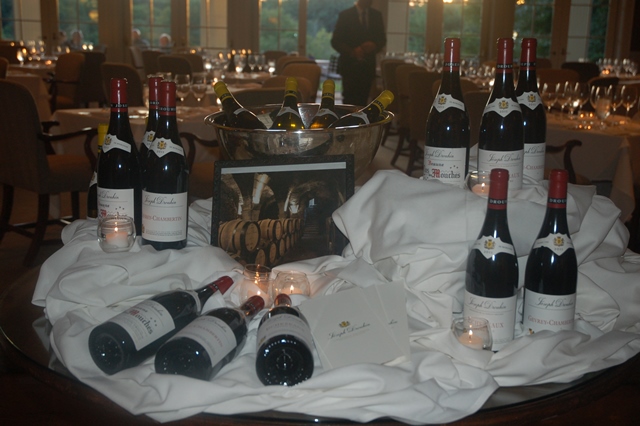
I attended such a dinner at the scenic GlenArbor Golf Club in Bedford Hills which featured the wines of Joseph Drouhin. With club members expressing an interest in overall wine exposure and education, ownership brought a Certified Sommelier on board to help quench that thirst. Fernando Silva, a Master Somm in training, has overhauled the club’s entire wine list and worked diligently to put together this event showcasing the 2011 vintage of selected Drouhin wines as well as the culinary creations of GlenArbor’s kitchen.

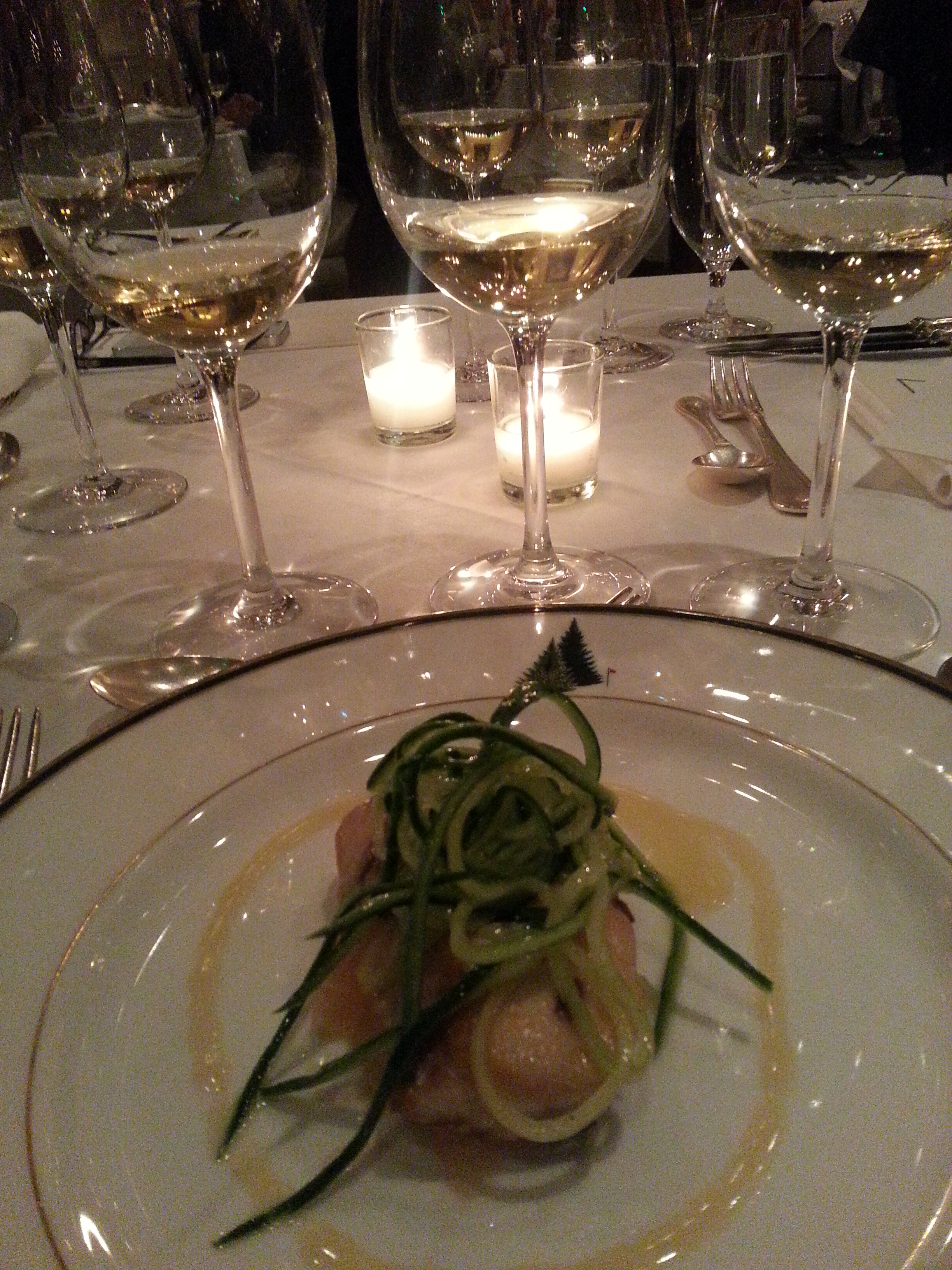
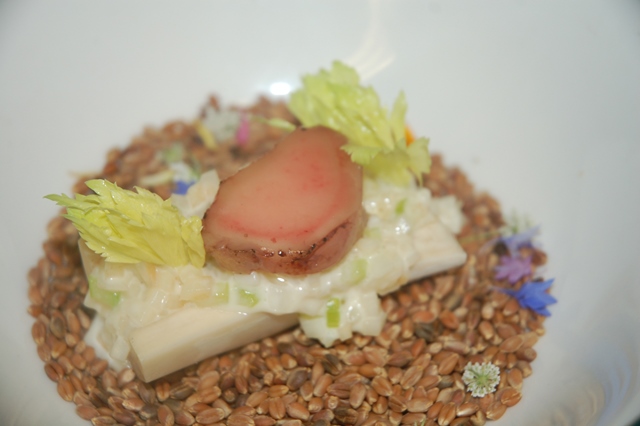
In keeping with a Burgundy themed evening, the Chef prepared a menu highlighting a few traditional French dishes including a celeriac risotto with marrow accent, a local striped bass dish and crepinettes of guinea hen alongside a guinea hen roulade. While there was some confusion regarding which wines were to be paired with which dishes for the first couple of courses, it did not seem to bother the members who appeared more than content with the wines in their glasses as well as the quality of dishes being served.

20140912_203917

GlenArbor Wine Dinner6

The white wine selections for the evening were the Puligny-Montrachet, Meursault and the very impressive Batard-Montrachet Grand Cru all from the 2011 vintage. The Batard was quite a treat, as there is not much wine to come out of this small Grand Cru vineyard. Layered and complex with notes of honey, lemon, and tropical fruits playing beautifully off the buttered toast, smoky oak and nutty backbone. It possesses amazing structure and length as well. While tasting through these whites, Laurent Drouhin (a Westchester resident) expressed his passion for not only his wines but for the region in general. His motto was “If you can’t come to Burgundy, Burgundy comes to you” when tasting his Drouhin wines.

The reds were up next and they were all served alongside the duo of guinea hen main course. Choosing to serve three wines with basically one dish was a little unorthodox, but in this relaxed environment where everyone knows and seems to enjoy one another’s company, it was not an issue. The Gevrey-Chambertin was showing nicely already with forward cherry and fresh strawberry fruit laced with hints of peppery spice and vanilla. The famed Clos des Mouches wine started a bit musty and gamey. However with some time the dark berry fruit, classic minerality and licorice nuances came about giving it a good amount of charm while displaying that classic Burgundy terroir.

But the wine of the night was easily the 2011 Echezaux. It took about 2 hours to finally show its true colors, but when it did it was truly stunning. Offering aromas of dried red cherry and berry, plum and raspberry with intensely fragrant notes of rose petals and sage. It maintained elegance and balance that only a well made Echezaux can, and is clearly a wine for the cellar as it will age over the next decade or more.

GlenArbor Wine Dinner7

On top of the quality wines being served, what the members seemed to enjoy most was the explanations and descriptions of the wines given by Laurent. He provided insight into the vineyards, the winemaking process and his family history giving those in attendance a glimpse into the Drouhin way of life. Since Laurent is not only a Westchesterite, but a golfer as of a few years ago (and apparently he has been bitten by the bug pretty seriously), everyone seemed to relate to one another on some level and enjoyed the vibe of the evening.

Golf and wine are a perfect pairing of passions for many, so why not indulge in both all in the same day?! However it’s not as easy as it may seem to pull off.  The club needs a kitchen staff that has the skill to execute a serious dinner service and put together an appropriate menu. Some high quality juice needs to be served, preferably with a host that can entertain and educate the members throughout the course of the evening. But the most important factor is the desire of the members to act on their passion and create an environment where wine becomes a priority within the workings of the club. If that all adds up, you have a pretty special scenario that can lead to some wonderful culinary experiences.

GlenArbor Wine Dinner3


My Top 10 Grillin’ Wines

As my somewhat pessimistic colleague always says… no one reads copy. So let’s just get right to the juice that will immensely improve your 2014 BBQ season:

10. Belle Ambiance 2013 Pinot Grigio, California – I am usually not a Pinot Grigio fan, but this is like Summer in a bottle and my new “house white”. Floral and citrus aromas that lead to stone fruit and hints of honeysuckle on the palate, good weight for a PG too. ($10-12)

9. Matarromera 2009 Crianza Tempranillo, Ribera del Duero – All kinds of black fruits with roasted coffee, pepper and earthy notes. Big yet balanced wine. ($30-35)

8. Barrel 27 2011 “Right Hand Man” Syrah Central Coast – With 7% Viogner it’s made in the Cote Rotie style. Dark fruit, dark chocolate and peppery spice, excellent value. ($15-20)

7. Seaglass 2012 Pinot Noir, Santa Barbara – For my money this is the best Santa Barbara Pinot in town. Classic Pinot fruit with hints of earth and spice complemented by a good dose of acidity. Perfect with poultry off the grill. ($12-15)

6. Chalone 2010 Chardonnay, Limited Release, Chalone AVA – Lots of classic apple, melon and banana fruit on the nose and palate with a great balance of acidity and oak aging ($13-18)

5. Argiano Non Confunditur 2011 – Don’t miss this serious Super Tuscan! Powerful yet balanced with alluring dark fruit, mineral and licorice. Nice acidity too so it will work with anything from grilled veggies to a Ribeye steak. ($16-20)

4. Bodegas Goulart 2010 Malbec, The Marshall, Mendoza – Aside from the great name, this is a tremendously balanced, lush and sultry wine. Blackberry, peppery spice, floral notes and racy tannins make this a no-brainer pairing for those saucy St. Louis BBQ ribs. ($20-25).

3. Two Hands 2012 Shiraz Angels’ Share, McLaren Vale  – Two Hands makes some of the best Shiraz out there, like the much more expensive Barossa Valley Bella’s Garden. But for under $30 this is a dark, dense and opulent fruit driven wine that screams for any kind of meat you choose to BBQ.

2. Manzanita Creek 2009 Zinfandel, Cloud Buster, Russian River Valley – What a ridiculous value Zin this is for under $20! Brimming with brambly berry, blueberry pie, brown spice and black pepper this is a wine that pleases on all levels. Super long and fruit filled finish keeps you coming back for more. ($20-28)

And the number 1 wine for this grillin’ season is….

1. Chateauneuf du Pape 2012 Domaine Barville, Brotte – A simply stunning, complex and big CDP loaded with really pure and expressive black fruits laced with black pepper, leather and meaty notes. The balance of acid and tannins gives this a harmonious balance making it a sure fire winner for whatever you plan to grill. It isn’t cheap, but in the realm of Chateauneufs it is a tremendous value considering the quality. ($40-45)

But really the best wine to drink at your summer BBQ is whichever one gives you the most pleasure! So if you’re a Napa Cab fan, don’t be afraid to break out that Caymus, Silver Oak or Duckhorn the next time the mood strikes you…clearly they will all be fantastic with a properly cooked piece of beef too.

Cheers!